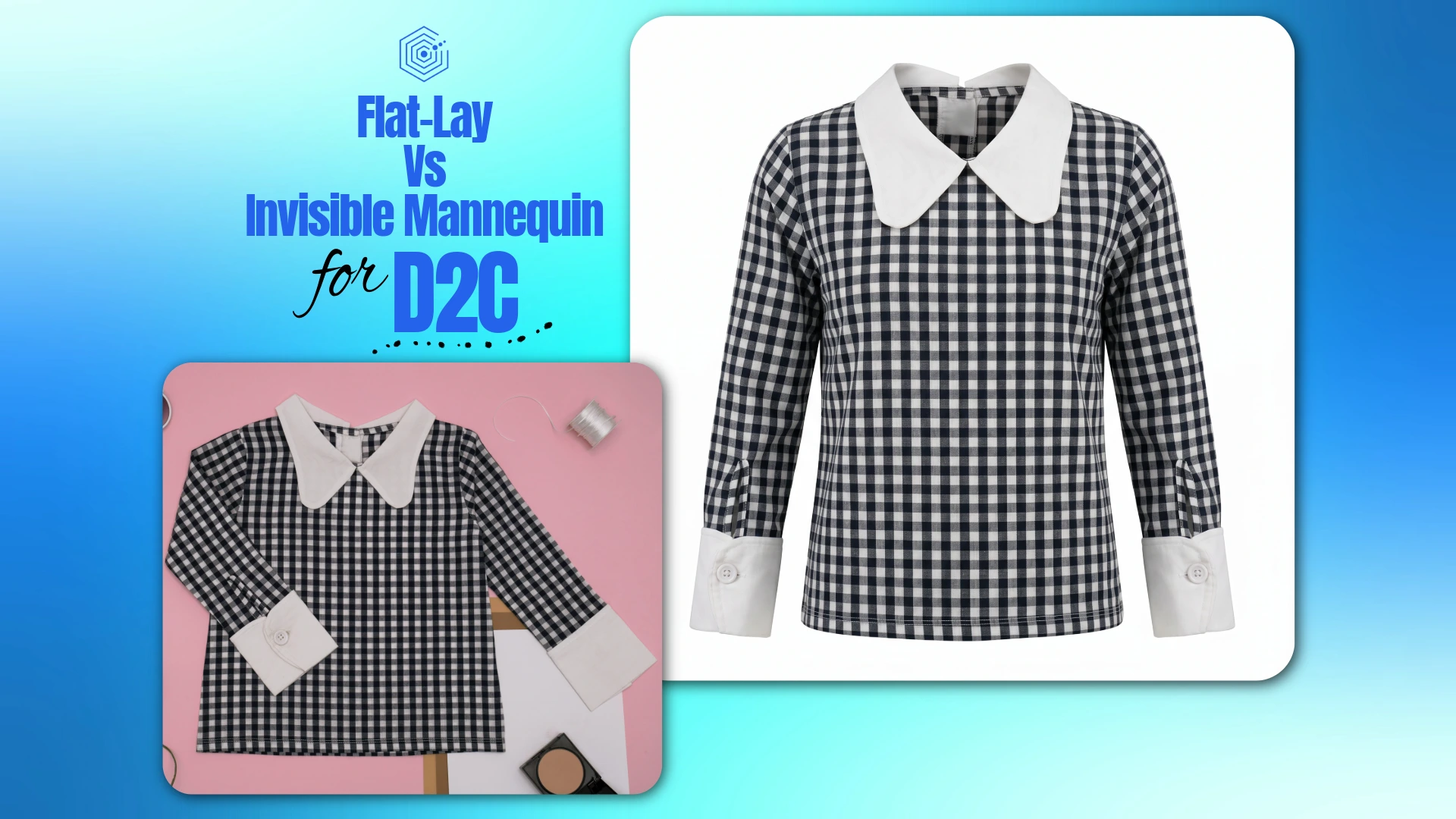

I have spent a significant amount of time testing different product photography approaches for clothing brands — running AI workflows, experimenting with editing pipelines, and working hands-on with AfterTaken. And the question I get asked most often by D2C sellers is this: should I go with flat-lay or invisible mannequin photography for my product listings?
My honest answer, based on everything I have tested: it depends on what you are selling — but for garments, invisible mannequin photography wins almost every single time. Let me walk you through exactly what I have observed, and why the difference matters more than most sellers realise.
What is Flat-Lay Photography — And Where Does It Actually Work?
Flat-lay photography is exactly what it sounds like. You lay your garment on a flat surface, style it as neatly as you can, and shoot it from directly above. It is fast, requires minimal equipment, and almost anyone can do it at home with a phone and decent natural light.
In my experience, flat-lay works reasonably well for a specific set of products such as; accessories, scarves, flat caps, jewellery, and items that do not have a strong 3D structure. For these categories, the format does the job. But the moment you move to structured garments such as; shirts, kurtas, dresses, jackets, trousers — flat-lay starts failing in ways that directly hurt your conversion rate.
From my own testing: flat-lay images of structured garments consistently received lower engagement and higher return rates compared to the same garments shot with the invisible mannequin technique. Buyers simply could not tell how the garment would actually fit.
- No sense of fit or structure — a shirt lying flat looks nothing like a shirt being worn
- Wrinkles and creases are more visible and harder to style away
- Sleeve and collar details get lost without a 3D form underneath
- Buyers lack confidence about how the garment sits on the body
- Higher return rates — customers feel misled when the delivered product looks different from the flat photo
What is Invisible Mannequin Product Photography — And Why Does It Convert Better?
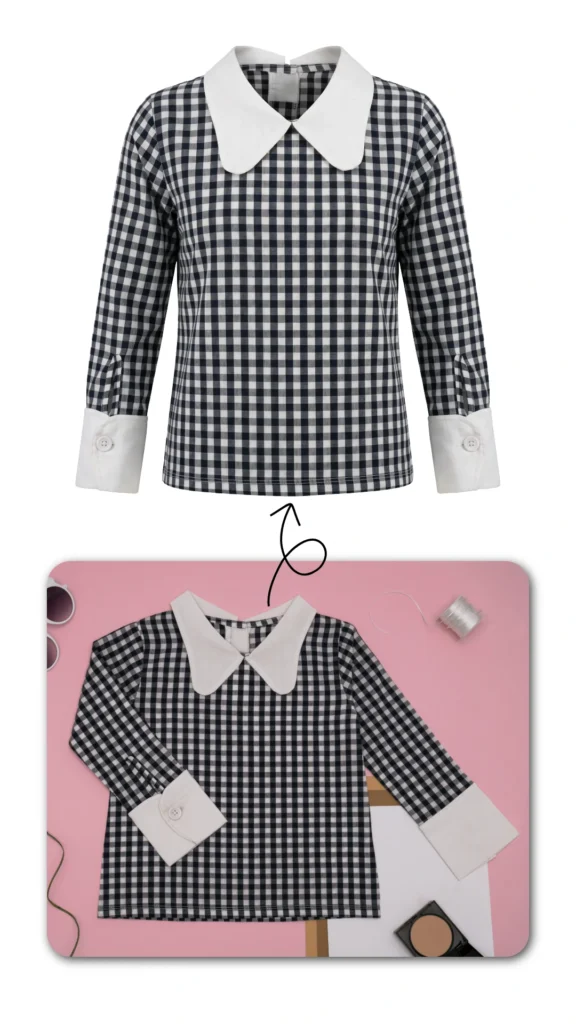
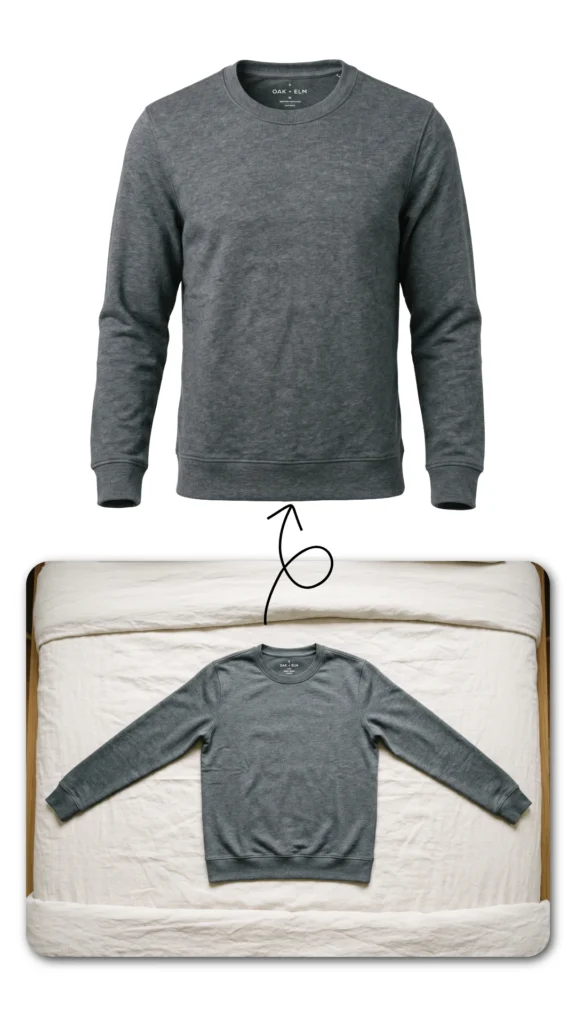
Invisible mannequin clothing product photography, also called ghost mannequin photography is the technique where a garment is placed on a mannequin, photographed, and then the mannequin is digitally removed in post-production. What remains is the clothing in a natural, three-dimensional, hollow shape — as if an invisible person is wearing it.
I started experimenting with this technique specifically because flat-lay results for structured garments were consistently underwhelming. The first time I processed a batch of kurtas through an invisible mannequin workflow, the difference in how the listings performed was immediately noticeable. The garments looked structured, premium, and most importantly, wearable.
Here is why it converts better, based on what I have observed across multiple catalogue launches:
- 3D garment structure is clearly visible — buyers can see how it sits, where it falls, how it fits at the shoulders and waist
- Collar, neckline, and sleeve details show up cleanly in the hollow-neck shot
- The garment looks premium and intentional — not like a rushed home photo
- Buyer confidence increases when they can accurately visualise themselves wearing the product
- Return rates drop because the delivered product matches what the customer expected from the listing
Flat-Lay vs Invisible Mannequin: Side-by-Side Comparison
| Factor | Flat-Lay Photography | Invisible Mannequin Photography |
| Shows garment fit | No | Yes — clearly |
| 3D structure visible | No | Yes |
| Setup cost | Very low | Low with AI tools |
| Time per image | Fast | 2 mins with AI |
| Buyer confidence | Low to moderate | High |
| Conversion rate | Lower | Significantly higher |
| Best for | Accessories, flat items | All garment categories |
| Professional appearance | Basic | Premium, studio-quality |
The Old Way vs AI Ghost Mannequin: What Has Changed?
When I first started working with invisible mannequin clothing product photography, doing it properly required a full studio setup — a quality mannequin, a photographer, a skilled Photoshop editor who could spend 20 to 30 minutes per image carefully masking the dummy out and blending the interior collar shots. The cost per image was high and the turnaround was slow.
This is what made flat-lay photography so appealing to small D2C brands. It was not that flat-lay was better. It was simply that ghost mannequin photography for ecommerce was too expensive and too slow for most growing sellers to sustain at scale.
AI ghost mannequin tools have fundamentally changed this equation. What used to take a professional editor 30 minutes now takes AfterTaken approximately 2 minutes — and the quality difference from manual editing is barely noticeable for standard product listing images.
From my hands-on experience using AfterTaken specifically, here is what the modern workflow looks like for mannequin photography for ecommerce:
- Shoot your garment on a plain mannequin with decent lighting and a clean background — a smartphone works fine
- Open AfterTaken AI Ghost Mannequin Photography Tool and upload your clothing photo and click Generate button.
- AI processes the image — detects the garment, removes the mannequin, fills in the hollow shape naturally
- Download your final image — studio-quality invisible mannequin effect, ready to upload to your listing
- Cost per image: Rs.5 to Rs.10 — compared to Rs.400 to Rs.500 at a traditional studio
To Be Fair: When Flat-Lay Is the Right Choice
I want to be genuinely balanced here, because in my experience there are legitimate scenarios where flat-lay is the smarter call — and pretending otherwise would not be honest.
Flat-lay works well when:
- You are selling accessories, scarves, caps, or jewellery — items without a 3D garment structure to display
- You need quick placeholder images while your main catalogue shoot is being processed
- You are testing a new design concept before committing to a full invisible mannequin shoot
- Your target platform favours lifestyle or editorial content over structured product shots
- You are selling extremely flowy or sheer fabrics that do not hold shape well on a mannequin
My Final Call: Which Should D2C Brands Choose?
Based on everything I have tested, built, and observed — for D2C clothing brands, invisible mannequin product photography is not just better. It is the standard you should be working towards. Flat-lay had its moment when there was no affordable alternative for structured garment photography. That moment has passed.
AI ghost mannequin tools have removed the two biggest barriers — cost and turnaround time. You no longer need to choose between quality and affordability. With tools like AfterTaken, you get studio-quality invisible mannequin clothing product photography at Rs.5 to Rs.10 per image, processed in 2 minutes, without needing a studio, a Photoshop editor, or any technical skills.
The D2C brands that are growing fastest are not the ones with the biggest photography budgets. They are the ones who figured out early that professional invisible mannequin photography at scale is now accessible to everyone and acted on it before their competitors did.
Related Articles & Next Steps
I hope you understand the difference between Flat-Lay vs Invisible Mannequin product photography. Now, you should learn more about best AI tools for your e-commerce business. Here are the best curated articles for you which helps to establish your e-commerce brand and grow your business:
- [AfterTaken AI Review] – Get attractive and eye-catchy product photos, product listing copy, colour corrections, colour changing of your products etc. in minutes for your e-commerce store. That helps you to decorate your e-commerce store.
- [Marketing AI Tools] – Most demanding and valuable topic which help you to attract your customers and making more profits from your business.
Frequently Asked Questions (FAQs)
Invisible mannequin clothing product photography consistently outperforms flat-lay for structured garments like shirts, kurtas, dresses, and jackets. Buyers can see the fit clearly, which directly reduces hesitation and cart abandonment.
Yes — for accessories, scarves, jewellery, and inherently flat items. But for any garment with structure, flat-lay fails to communicate fit and almost always leads to higher return rates.
You shoot your garment on a mannequin, upload the photo to an AI tool like AfterTaken, and the AI removes the mannequin automatically — delivering a clean, studio-quality invisible mannequin effect.
From real experience — yes. When buyers can clearly see garment structure and fit before purchasing, the delivered product matches their expectations. This directly brings down returns caused by “looks different from photo” complaints.
Absolutely. A basic mannequin, decent lighting, clean background, and a good smartphone camera is enough. AI tools like AfterTaken handle the editing — no Photoshop or designer needed.



Pingback: How to Shoot Ghost Mannequin at Home Using Your Smartphone